
Finding Miami Township Residents Carefully
Miami Township records are divided by the question being asked. A current street address points first to the County Auditor, where the parcel, situs address, legal description, and owner record meet. A name may be checked through the state voter tool, a deed index, a court docket, or a library collection, but each source answers only its own question. A property record can connect a named owner to a parcel. It does not establish every person at that location. A historic directory can show a listed address for its publication year. It does not prove a continuous stay.
Use a source date and keep the different address types apart. The situs address is the physical property location. The mailing address is where tax correspondence goes and may be elsewhere. The legal description is the lot, subdivision, or survey language that links a modern address to older deeds and plats. Those distinctions make a Miami Township residents directory search more reliable when street numbers, postal labels, or ownership change.
- Search the Auditor by owner, situs address, or parcel number and record the legal description.
- Use Ohio My Voter Information for a narrow individual check when a first name, last name, and county are known.
- Carry the owner name and legal description into CountyFusion to inspect the deed or mortgage chronology.
- For a past household, catalog-search library directories, newspapers, maps, and census resources by name and historic place name.
- When no online result exists, ask the office of origin for an existing nonexempt record under Ohio Public Records Act procedures.
Note: Start with the narrowest reliable identifier, then document where and when each result was obtained before treating records as related.
Miami Township Parcel Clues
The Clermont County Auditor is the right first stop when an address, parcel number, or possible owner is already known. Its property search is an ownership and land-record starting point, not a household list. Read the current owner, situs address, mailing address, subdivision or lot language, values, and any transfer reference as separate fields. When a mailing address differs from the situs, it may simply be the correspondence destination. The parcel number and legal description are the stronger bridge to a deed chain.
The official Auditor owner-search screen is shown below. It is useful when a name may be connected to land in Miami Township.
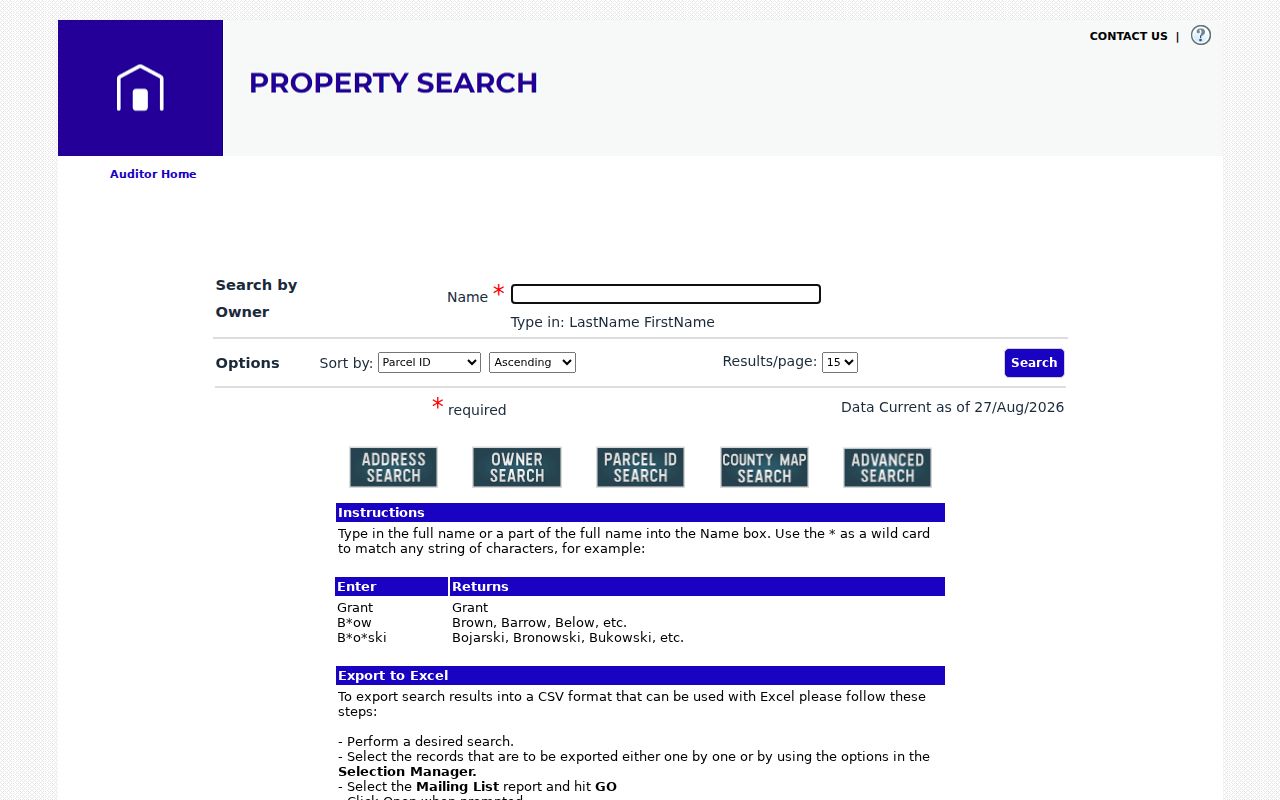
Use the result as a lead, then compare it with the physical address and Recorder index. The owner name and a complete household are not interchangeable.
Miami Township Voter Name Check
Ohio My Voter Information is a one-person confirmation path, not a browseable resident roll. The form requires First Name, Last Name, and County, so Miami Township searches should use Clermont County. A broad match can later prompt for a street name. The Secretary of State advises trying a common first-name variation, a former surname, or a previous Ohio county address before contacting the Board of Elections. Confidential voter records, including qualifying Safe at Home participants, are not public.
| Voter-tool control | Miami Township use |
|---|---|
| First Name | Required; try a recognized first-name variation if needed. |
| Last Name | Required; former names can resolve a historical search. |
| County | Required; select Clermont County. |
| Street Name | Conditional narrowing control after a broad match. |
The Miami Township community profile supplies the jurisdictional context behind this residents directory search.
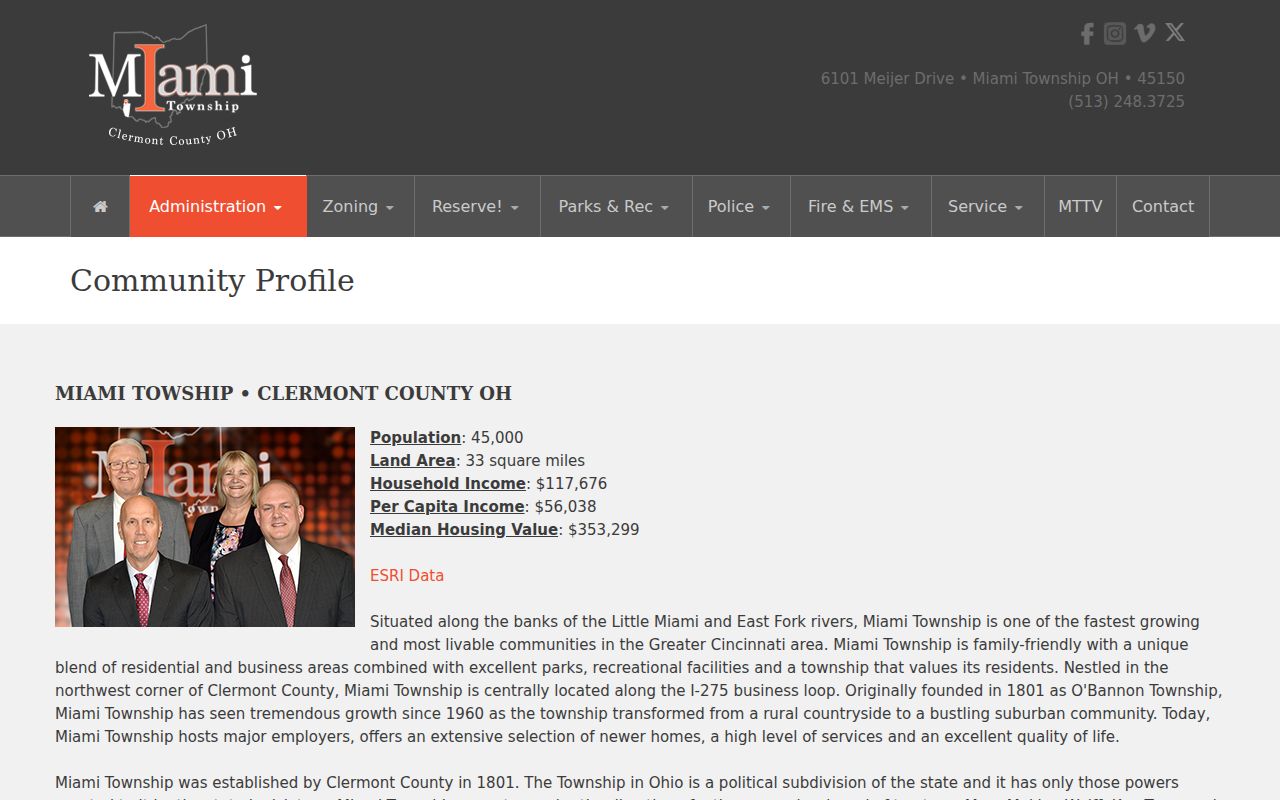
Postal city names, school systems, and service areas can overlap. Confirm the parcel and township layer when jurisdiction matters.
Miami Township Resident Record Custodians
Miami Township is a limited-home-rule township, but land title, the tax roll, most court files, marriage records, and probate matters are county functions. The practical records hub is Batavia. The Recorder keeps instruments and plats. The Auditor supplies the property starting point. GIS places parcels and jurisdiction layers on a map. The Clerk and Probate Court answer different court and family-history questions. Township Administration keeps local zoning, administrative, and planning material. The records center preserves material for many county offices but directs requests to the office that created the record.
Clermont County Recorder
101 East Main Street
Batavia, OH 45103-2958
513-732-7236
CountyFusion search instructions
Clermont County Auditor
Property-roll starting point
Owner, address, and parcel modes
Use the official search route
Ohio Elections Lookup
Individual registration check
Choose Clermont County
Board of Elections: 513-732-7275
A name tied to one of these sources may still need verification elsewhere. The address-led sequence is covered in greater detail on the Miami Township street directory.
Miami Township Deed Index Trail
CountyFusion is the Recorder path after an Auditor search has supplied an owner, legal description, or transfer reference. The Recorder advises broad name searching, because entering less of a name can reveal variants. A useful result records the party role, document type, recording date, instrument number, book or page when present, and legal or property cross-reference. Grantor means the party transferring an interest. Grantee means the receiving party. Those roles let a title trail move backward without assuming that a shared surname identifies the same person.
| CountyFusion field | What it helps establish | Search caution |
|---|---|---|
| All Names | Recorded party and role | Partial names can catch variants; broad searches can exceed the result cap. |
| Recorded Date | Instrument chronology | Use a range to narrow a common name. |
| Document Type | Deed, mortgage, plat, lien, or another instrument | Keep historical documents selected for older research. |
| Instrument or Book/Page | Known-record retrieval | Use when a prior document reference is known. |
The CountyFusion document-search entry is pictured here after the required disclaimer route.
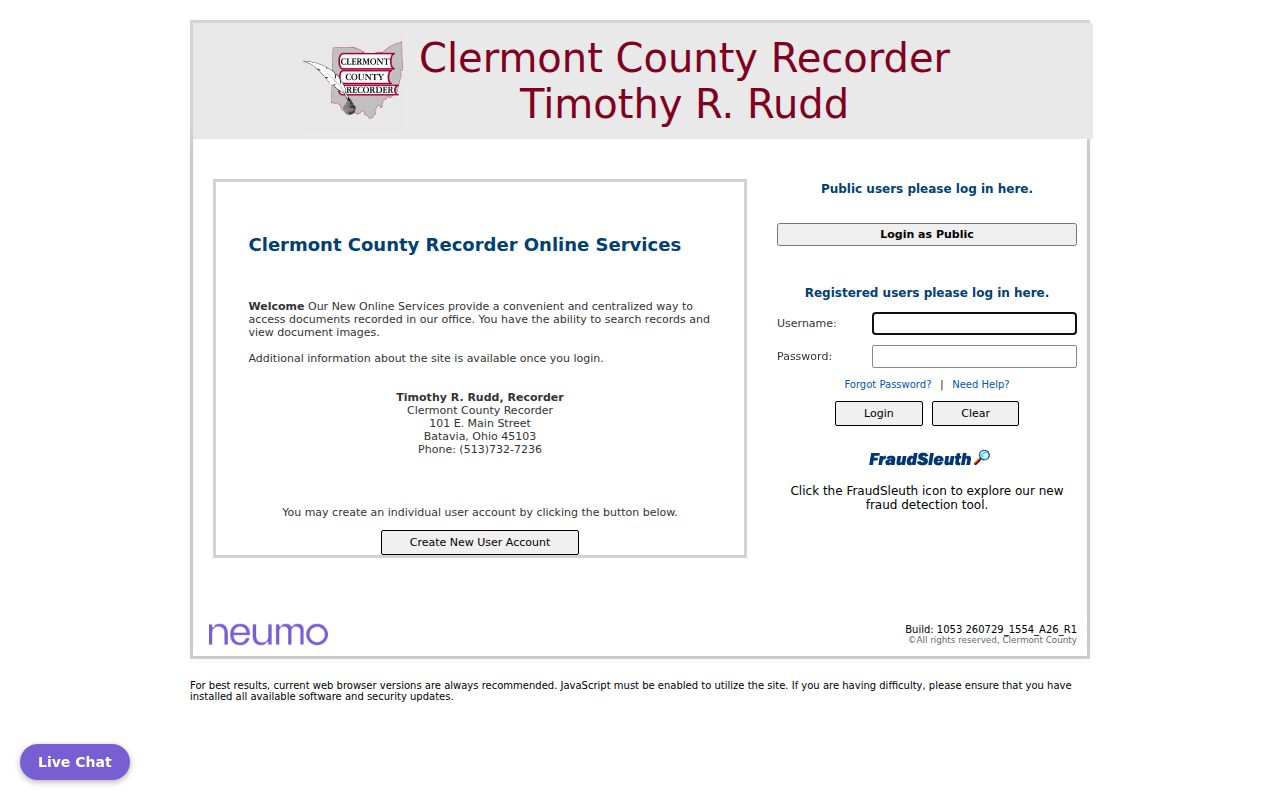
Web copies cover documents recorded from 1980 to the present. For earlier material, contact the Recorder for historical books, counter copies, or a mail request.
Miami Township Directory Sources Today
There is no single government list of all Miami Township residents. The useful sources are purpose-built rolls. The Auditor shows tax-roll ownership. The voter tool checks an individual registration record where public. CountyFusion identifies parties to recorded land instruments. Court indexes place a named party in a case, while Probate can provide estate, will, or marriage paths under its rules. These are evidence layers, not interchangeable claims about where every person lives.
| Miami Township source | Specific record connection | Custodian | Access limit |
|---|---|---|---|
| Auditor real-estate roll | Owner, parcel, situs and mailing fields | Clermont County Auditor | Owner is not automatically present occupancy. |
| My Voter Information | Individual registration and precinct context | Ohio Secretary of State | Required name and county; confidential records excluded. |
| CountyFusion index | Grantor, grantee, instrument, and date | Clermont County Recorder | Online web-document range starts in 1980. |
| Case Access | Case party and procedural timeline | Clerk of Courts | Restricted records and pre-1988 Common Pleas material have limits. |
| Library local history | Historic printed or archival appearance | Clermont County Public Library | Holdings and database access vary by collection. |
When the goal is to confirm a single person across sources, use the separate resident lookup route and retain the date of each search. That helps resolve same-name results without stretching a single record beyond what it states.
Miami Township Postal Name Trap
Miami Township headquarters uses a Milford, OH 45150 mailing address, but that postal wording does not change the township, county, or land-record custodian. The same problem appears elsewhere in the township, where address research can meet Loveland postal labeling, historical community names, precinct lines, school districts, or a different local service area. A ZIP code is a delivery geography. It is not a legal boundary and it cannot prove that an address belongs to Miami Township.
- Situs address
- The physical property address used to reach the Auditor parcel.
- Mailing address
- The tax-correspondence address, which may be outside the township.
- Legal description
- The lot, block, subdivision, or survey wording used in deeds and plats.
- Postal city
- A USPS delivery label that may not match the civil jurisdiction.
The official township home page provides the local administrative starting point.
For a boundary question, match the actual situs address to the county GIS township and parcel layers rather than relying on the postal city.
Miami Township Court and Probate Leads
Courts add a different kind of record trail. Clermont County Common Pleas and Domestic Relations Case Access supplies public gateways, but records before January 1, 1988 are at the Clerk's office, and the public systems exclude civil domestic-violence petitions. An online case screen may not include every filed item, later update, or image. Record a case number, court division, party role, filing date, case type, event dates, and published status before seeking an official copy or inspecting the file.
Probate is the local route for estates, wills, and marriage records. Marriage records from 1800 to the present are public. The certified-copy mail procedure requires both names as used at licensing, the full marriage date, $3 for each copy by cash or money order, and a stamped return envelope. Birth and death custody follows a different local split, with pre-1908 material at Probate and later county events through Public Health or the state channel.
The Common Pleas public case-search gateway is shown here.
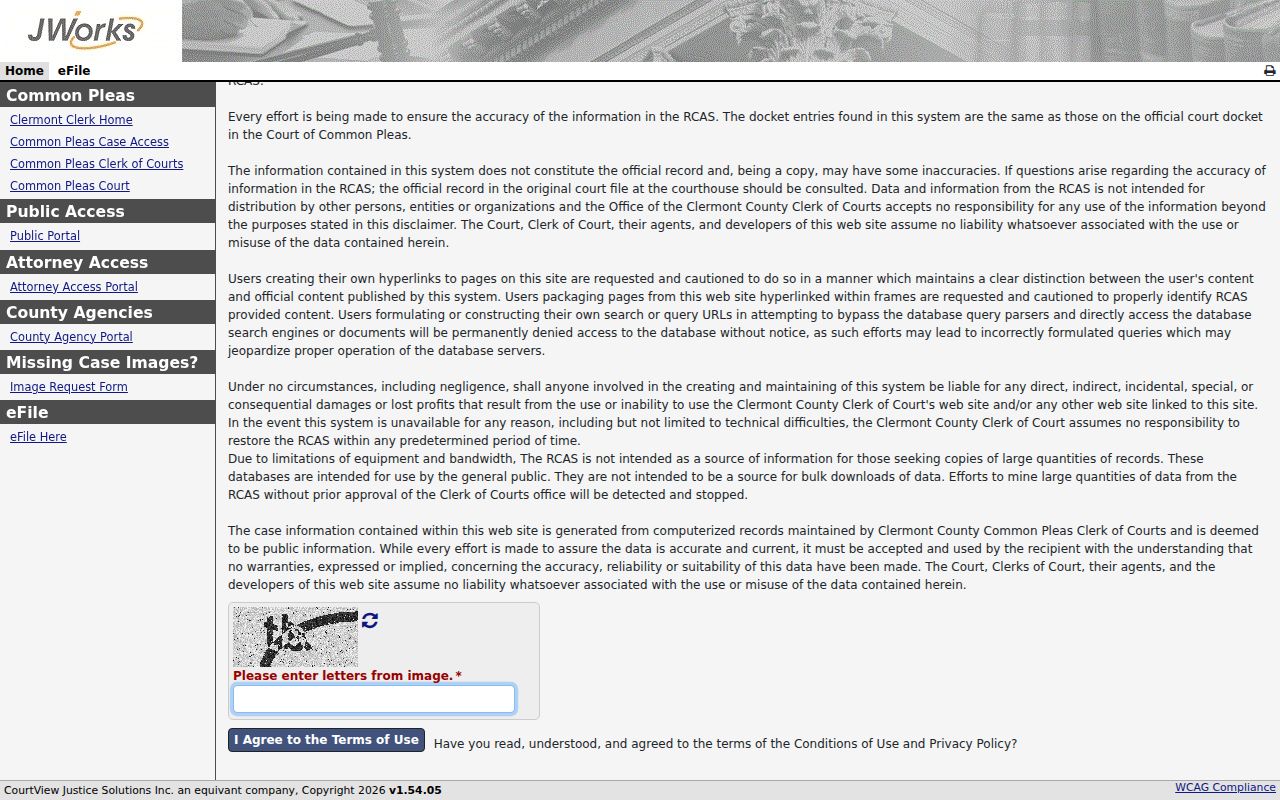
A docket hit is a procedural lead. It should be checked against the court file and its access restrictions before drawing a conclusion.
Miami Township Record Request Options
A missing portal result does not mean a missing record. Ohio Public Records Act practice begins with the office of origin, the record type, a useful date range, the name or address needed to locate it, and the preferred inspection or copy format. An office can explain that it does not keep the record, that a retention schedule removed it, or that an exemption prevents release. It is not required to create a new list or confirm private facts by phone. Requests are answered promptly for inspection and within a reasonable period for copies, with the facts of retrieval and redaction considered.
The Township Fiscal Officer's RC 100 route is a convenience form, not a mandatory gate. Inspection is free. The first 24 copied pages are free, then copies are five cents per page; mailing and advance-payment conditions can apply. Township police, Permit Central, the Recorder, courts, and the library each have their own channels, so direct the request to the office that holds the record.
The Miami Township public-records request form shows the local online route.
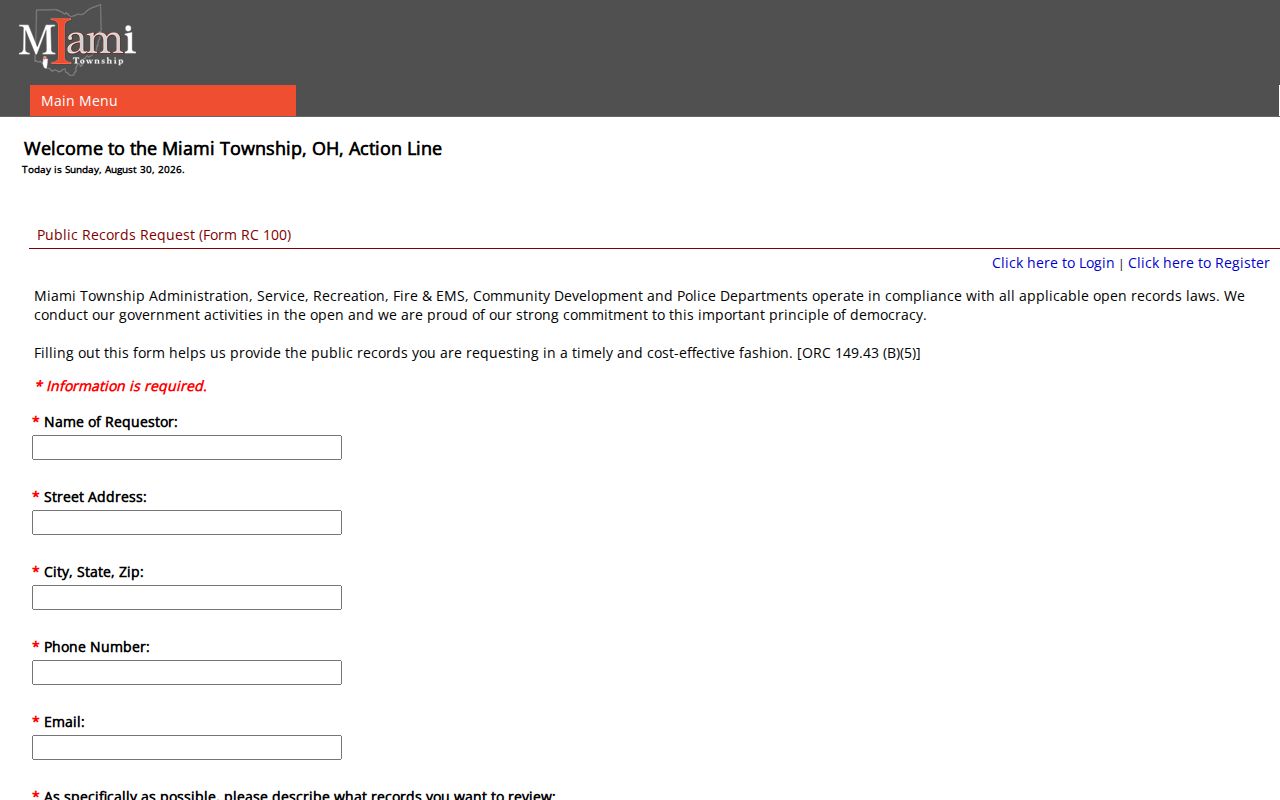
A clear request can ask for inspection, pickup, mail, or email delivery, while leaving the custodian to apply the record-specific rules.
Miami Township Historic Search Names
Older Miami Township records may not use the modern township wording. The township began as O'Bannon Township in 1801 and was later named for the Little Miami River. Branch Hill, Guinea City, Mulberry or New Salisbury, O'Bannonville or O'Banionville, and Perintown or Perin's Mills are practical catalog, map, newspaper, and deed terms. A present address can fail in an old index simply because the source used a place name, rural route, subdivision, road, or legal description instead.
That history is especially useful when tracing a parcel. Branch Hill was laid out in 102 lots in 1873. Guinea City's post-office succession ended in 1907, when Loveland took delivery. These facts do not identify a person at an address, but they provide alternate search terms and date context for a documented property or family question.
The Clermont County Recorder resource is a useful launch point for land and title records.
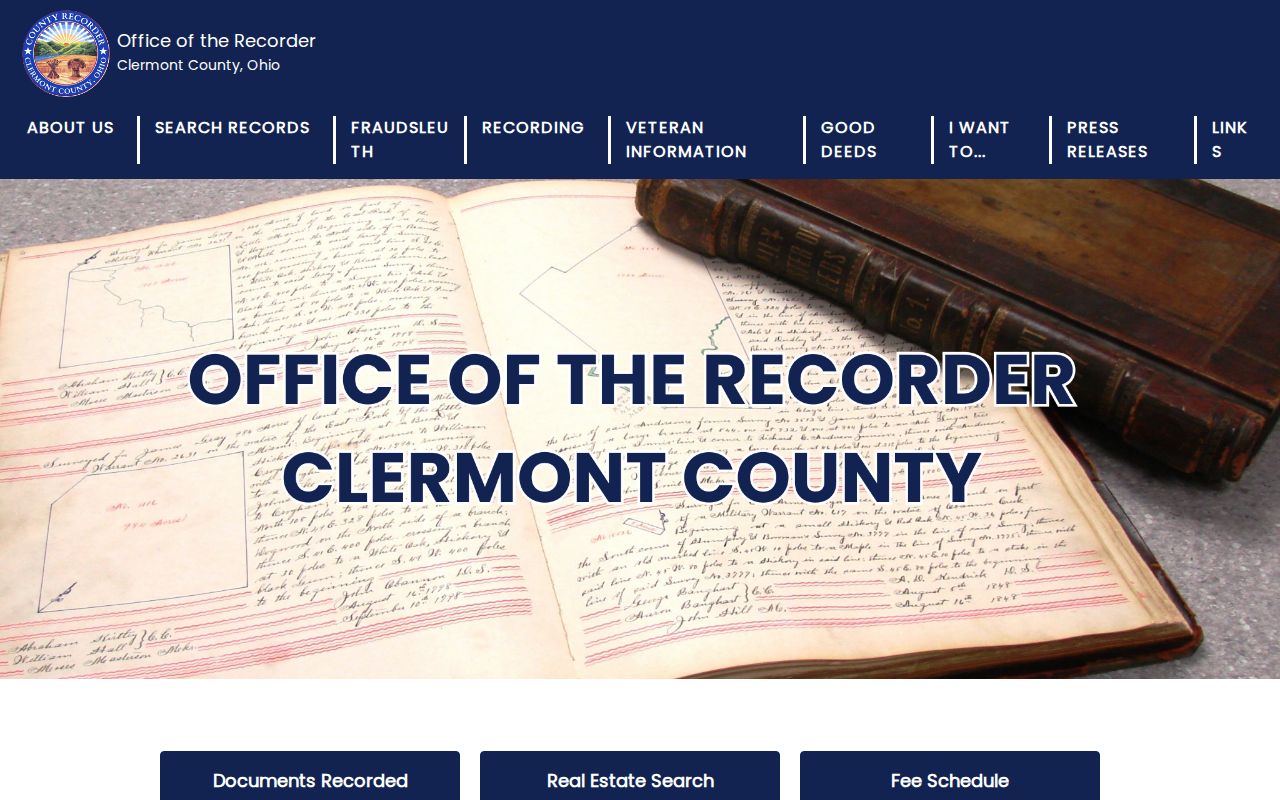
Cross-check an historic place name with the legal description and current parcel map before joining records from different eras.
Miami Township Historical Directory Trails
Miami Township does not have one verified continuous municipal directory run online. The reliable route is the Clermont County Public Library's Batavia Branch and its Clermont County Genealogical Society Collection. Documented leads include the 1882 Gazetteer and Directory of Clermont County, the 1902 Encyclopedic Directory and History of Clermont County, and the Ohio Genealogical Society's Clermont County Directory for 1932-34. Later Cincinnati Suburban editions are a metropolitan fallback whose specific locality coverage should be checked, not assumed.
The library catalog can search title, subject, keyword, and location before a staff request. Its genealogy resources include in-library Ancestry Library Edition, a FamilySearch affiliate at Batavia, HeritageQuest, the Cincinnati Enquirer archive for 1841-2009, and Sanborn maps made from 1867 to 1970. An address in a directory is a dated listing; pair it with a census, deed, obituary, or map instead of treating it as a permanent residence claim. The fuller collection method appears on the Miami Township city directories page.
The Batavia Branch genealogy-collection page illustrates the local library route.
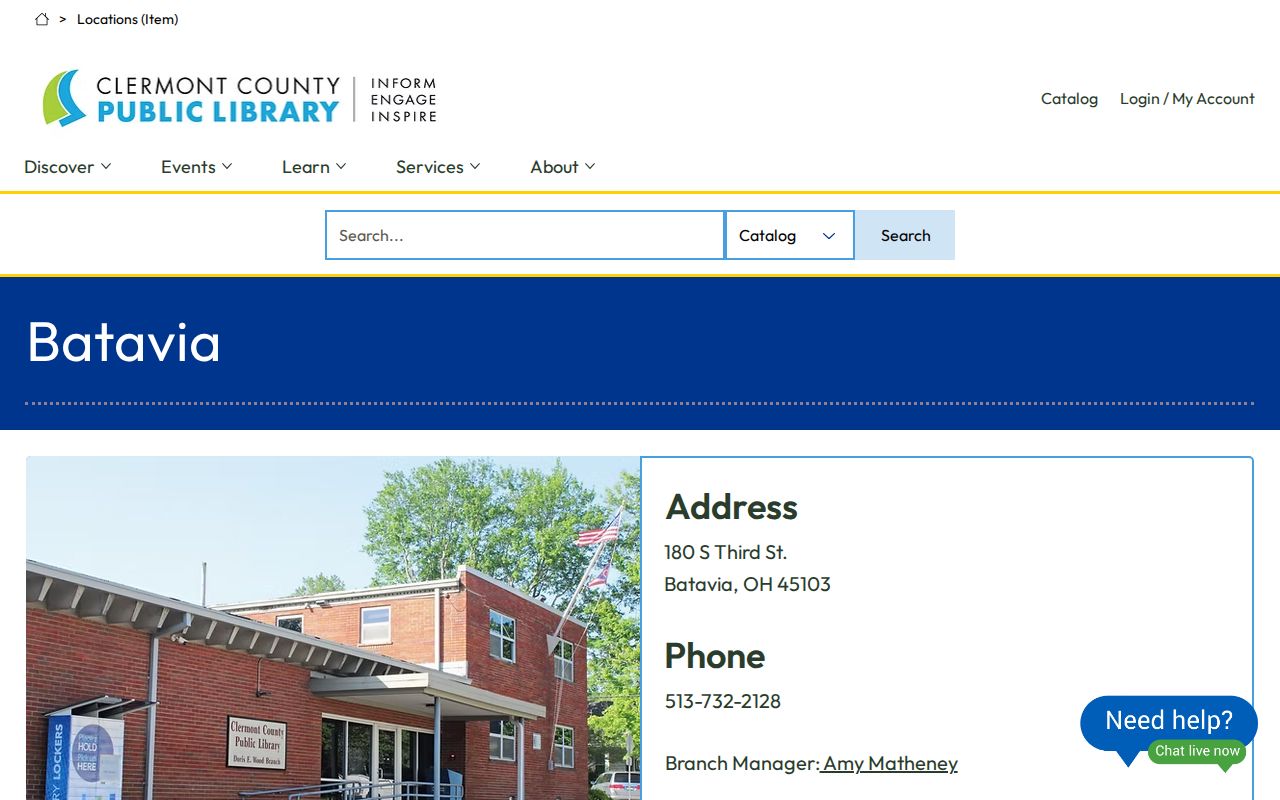
Specific questions with a name variation, date range, historic community, address, and record type give library staff a usable starting point.
Miami Township FraudSleuth Alert
Property research also has a safety use. The Recorder offers FraudSleuth, a free GovOS-powered alert service that sends an email when a document is recorded against a monitored name. The Recorder recommends separate profiles for name versions such as a full middle name, middle initial, or nickname. An alert is not proof of fraud, ownership change, or a valid claim. It is a prompt to inspect the recorded instrument and contact the Recorder or an appropriate professional if the filing is unfamiliar.
Recorder guidance explains the alert route and documents the separate name-variant profiles. The monitor is most useful when paired with direct review of the document number, party names, and recording date.
Clermont's published copy routes also help when the alert points to an older or unfamiliar instrument. Computer-printed copies at the counter are ten cents a page, while a staff-pulled book page is twenty-five cents. A mailed copy request needs the proper fee and a stamped return envelope; mailed copies are two dollars a page. Those are record-copy options, not confirmation that a filing is improper.
Miami Township Access Boundaries
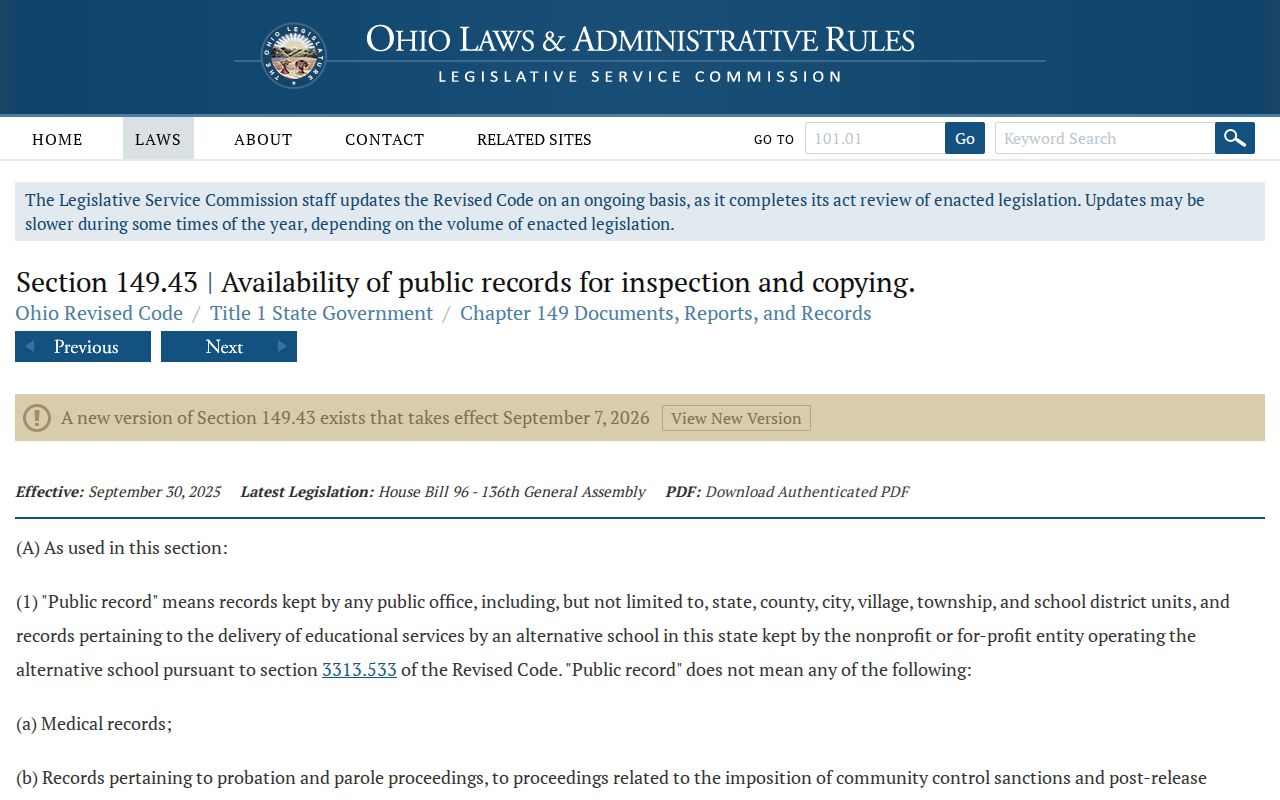
Ohio Public Records Act, R.C. 149.43, access has real limits. Safe at Home can protect a qualifying participant's designated address and confidential voter status. Court rules also protect sealed, expunged, juvenile, adoption, and other restricted material. The Recorder cannot simply remove a lawful recorded document unless a statute authorizes that action, so a disputed ownership or address record must be taken to the source custodian. Motor-vehicle information is controlled separately under federal law and does not become a local address directory.
The Ohio Public Records Act text is shown here for the governing access rule.
When information is protected or a public entry appears wrong, the safe course is to contact the agency that maintains the original record.