Explore Miami Township City Directory Collections
There is no continuous, verified municipal Miami Township city-directory run. The documented shelf is instead county and metropolitan. Begin with the catalog and the Batavia genealogy collection, then test the title, year, and locality coverage before treating any result as a Miami Township listing. That distinction matters because a Clermont or Cincinnati-suburban volume can be useful without covering every township address.
| Collection | Verified years | Where held | Access route |
|---|---|---|---|
| Gazetteer and Directory of Clermont County, Ohio, Arthur P. Bancroft | 1882 | Clermont County Genealogical Society Collection, Batavia Branch | Catalog and staff inquiry |
| Encyclopedic Directory and History of Clermont County, Ohio, Thirey & Mitchell | 1902 | Batavia Branch collection | Catalog and staff inquiry |
| Clermont County Directory | 1932-34 | Ohio Genealogical Society | Library or copy-service inquiry |
| Cincinnati Suburban City Directory | 1961, 1963, 1969, 1971, 1976, 1979 | Ohio Genealogical Society | Test locality coverage in each edition |
The Bancroft work was published in Batavia by D. O. Cowen & Co. and has an index credited to Jerald and Phyllis Wilson. The 1902 Thirey & Mitchell work is partially indexed by Myra Erion and Barb McCarthy. These are documented collection facts, not evidence that every Miami Township household was printed. Note: a missing name can reflect the volume’s scope, a spelling variant, or an unlisted household.
Miami Township Research Starts at Batavia
The Batavia Branch is the practical local-history counter. It is at 180 S. Third Street in Batavia and lists a genealogy collection, including the Clermont County Genealogical Society Collection. Published hours are Monday 10-8, Tuesday noon-8, Wednesday and Thursday 10-6, Friday and Saturday 9-5, and closed Sunday. Staff accept specific genealogy questions in request order as time permits, so a reply may take time.
Use that staff route for a precise question: give the name and variants, an approximate date range, a Miami Township historic community, known address, and the kind of item sought. A catalog title, obituary, yearbook, directory, or map is a workable request. A broad request for a general resident list is not. The staff route supplements the catalog; it does not establish ownership or replace a title examination.
The Clermont Library catalog shows Search type, Search term, and Location controls. A title, subject, or keyword search for Miami Township, Milford, Loveland, Clermont County, directory, telephone directory, criss-cross, yearbook, or a historic place name is a sound first pass.
The Clermont Library catalog provides the first check for a dated title and holding location.
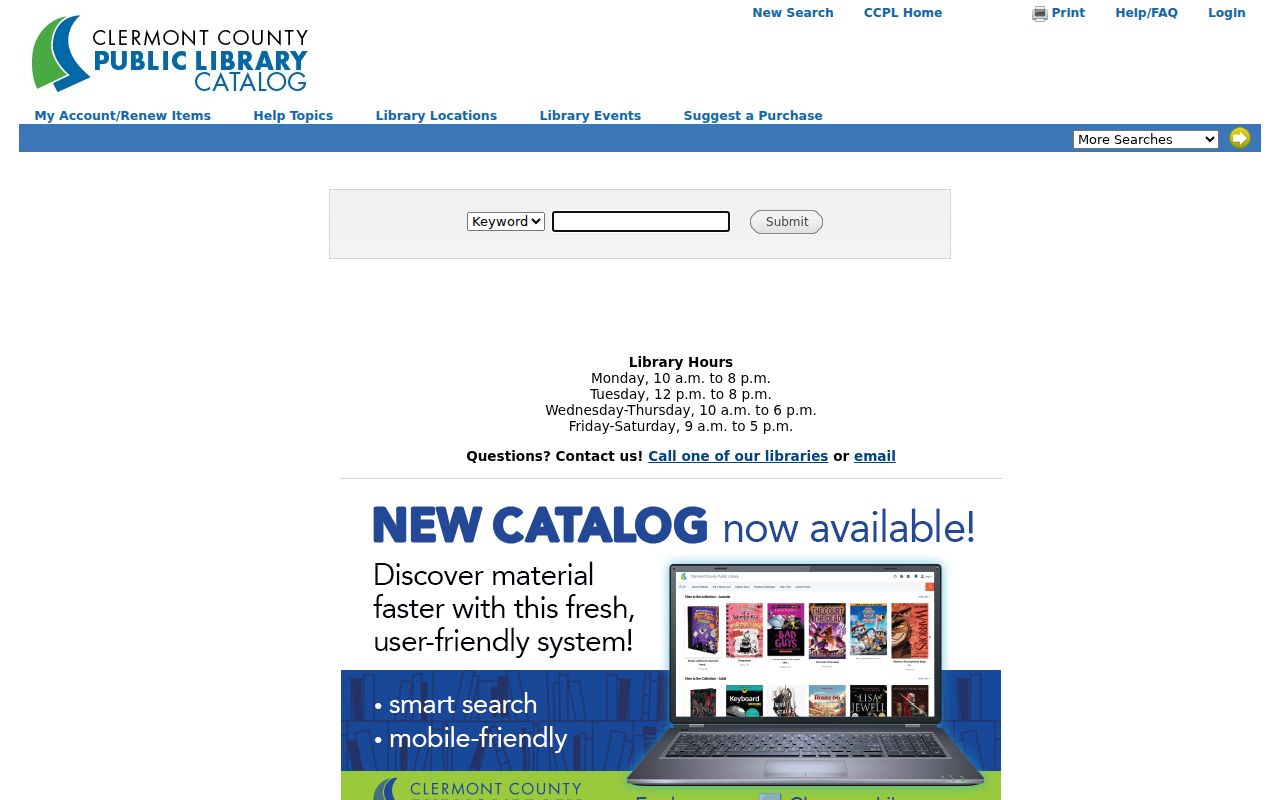
Catalog results can separate a title from the branch that holds it, but they do not settle its contents. Preserve the title exactly, then compare the title page, date, publisher, index, and geographic heading when the item is in hand. That small check prevents a Clermont County finding from being overstated as a complete Miami Township city directory.
Miami Township Names in Older Catalogs
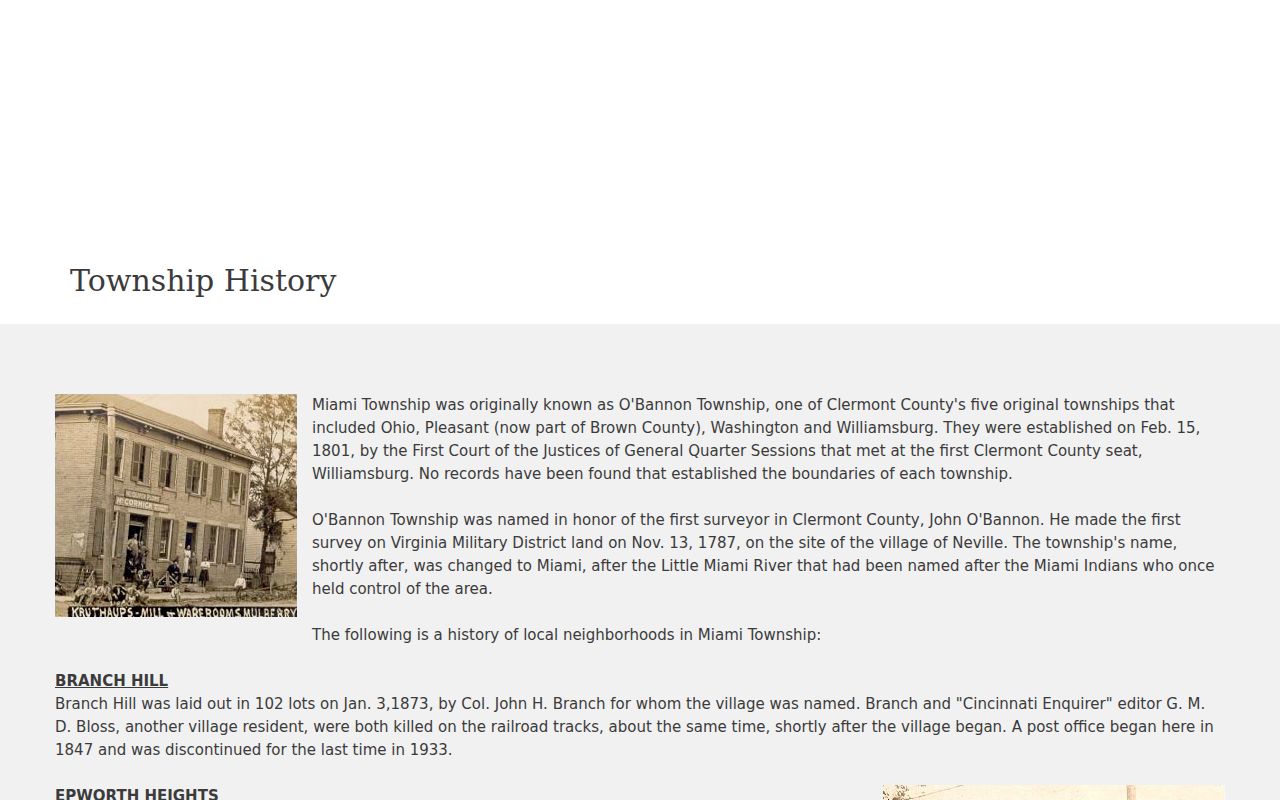
Modern place wording can hide an older record. Miami Township began as O'Bannon Township in 1801 and later took its name from the Little Miami River. Search O'Bannonville or O'Banionville, Perintown or Perin's Mills, Mulberry or New Salisbury, Branch Hill, and Guinea City alongside the surname and street. These terms belong in catalog, newspaper, map, and deed searches because a period source may not use the current township label.
Branch Hill was laid out in 102 lots in 1873. Guinea City’s post offices ended in 1907 when Loveland took delivery. Those facts help explain place-name shifts, but they do not prove an address was within a particular publication’s coverage. Match the name to a road, lot, or legal description when possible.
Miami Township’s historical-community record identifies the alternate place names worth testing.
Read a Miami Township City Directory Carefully
No verified Miami Township directory image or local publisher-and-year volume was publicly exposed during the research. For that reason, do not fill a supposed local entry with standard abbreviations. When a staff member produces a volume, transcribe only what is printed and photograph or note the abbreviation key first. The inventory below records what to inspect, not what any uninspected Miami Township entry must contain.
| Headword | Name exactly as printed, including initials and spelling. |
|---|---|
| Family notation | Spouse or widow notation, only if the volume prints it. |
| Occupation | Occupation or named organization, if printed. |
| Address and classification | Street address plus any business or residence classification shown. |
| Property-status notation | Any notation printed by that edition, without assuming its meaning. |
| Volume evidence | Page, publisher, publication year, and the abbreviation key. |
- Criss-cross directory
- An address-ordered section, when a directory includes one, used to check a street rather than a surname.
- Householder index
- An index arranged around the named householders the publisher chose to list; it is not a complete population roll.
- Abbreviation key
- The volume’s own explanation of shortened terms and symbols. Its meaning controls over a convention learned from another directory.
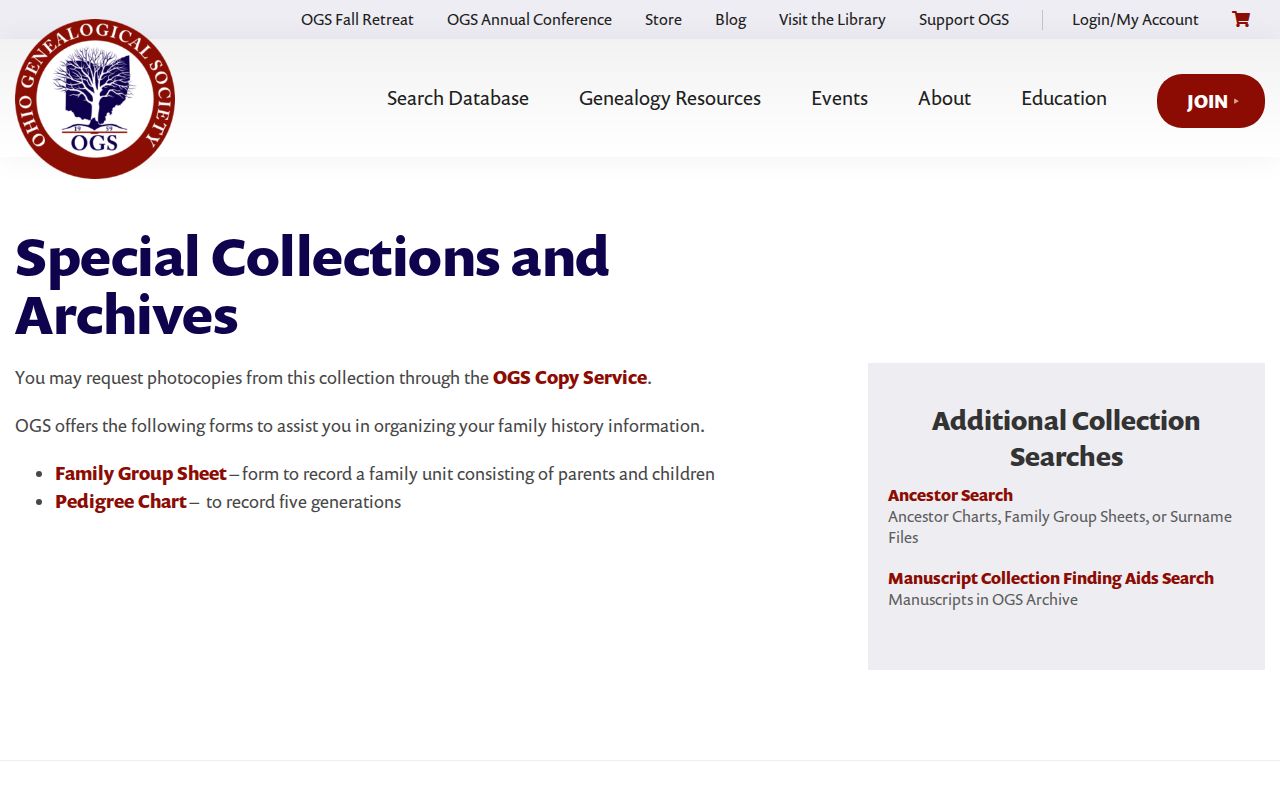
Ohio Genealogical Society holdings document the Clermont and Cincinnati-suburban titles to request by year.
Miami Township City Directory Dates to Test
The verified chronology is short but useful. It starts with the 1882 Bancroft Clermont gazetteer and directory, continues with the 1902 Thirey & Mitchell directory, and reaches the 1932-34 Clermont County Directory at OGS. The Cincinnati Suburban editions from 1961, 1963, 1969, 1971, 1976, and 1979 offer later metropolitan checks. They are not a continuous series and should not be treated as one.
- 1882: Bancroft’s Clermont gazetteer and directory supplies the earliest documented title in this set.
- 1902: Thirey & Mitchell adds an encyclopedic county directory with partial indexing.
- 1932-34: the Clermont County Directory is listed by OGS.
- 1961-1979: selected Cincinnati Suburban editions provide locality coverage to test, edition by edition.
A blank interval is not proof of a move or death. It may be a gap in the verified collection, a title not yet discovered in the catalog, or a directory that used a different community heading.
Trace a Miami Township City Directory Household
Start with an address or owner record to define the time window, then search the catalog for city, telephone, or reverse directories using both the address and surname. Preserve each finding with its year and page. Pair the publication year with the nearest released federal census, then use the Cincinnati Enquirer archive for notices that can explain a move, death, marriage, reunion, or address event. A directory listing is a contemporaneous clue, not a title record.
- Record the surname variants, address, historic community name, and a time window from property research.
- Search the catalog by title, subject, and keyword, then request the exact volume from Batavia or OGS.
- Inspect the entry and its abbreviation key, preserving the page, publisher, and year.
- Compare the result with the nearest released census and with an address or deed record.
- Search notices and obituaries to test a disappearance from the next available directory.
For the address-based title trail itself, use the Miami Township past residents record path. It begins with a parcel and legal description, then moves backward through recorded instruments rather than treating a directory line as ownership proof.
Miami Township Library Sources Beyond Directories
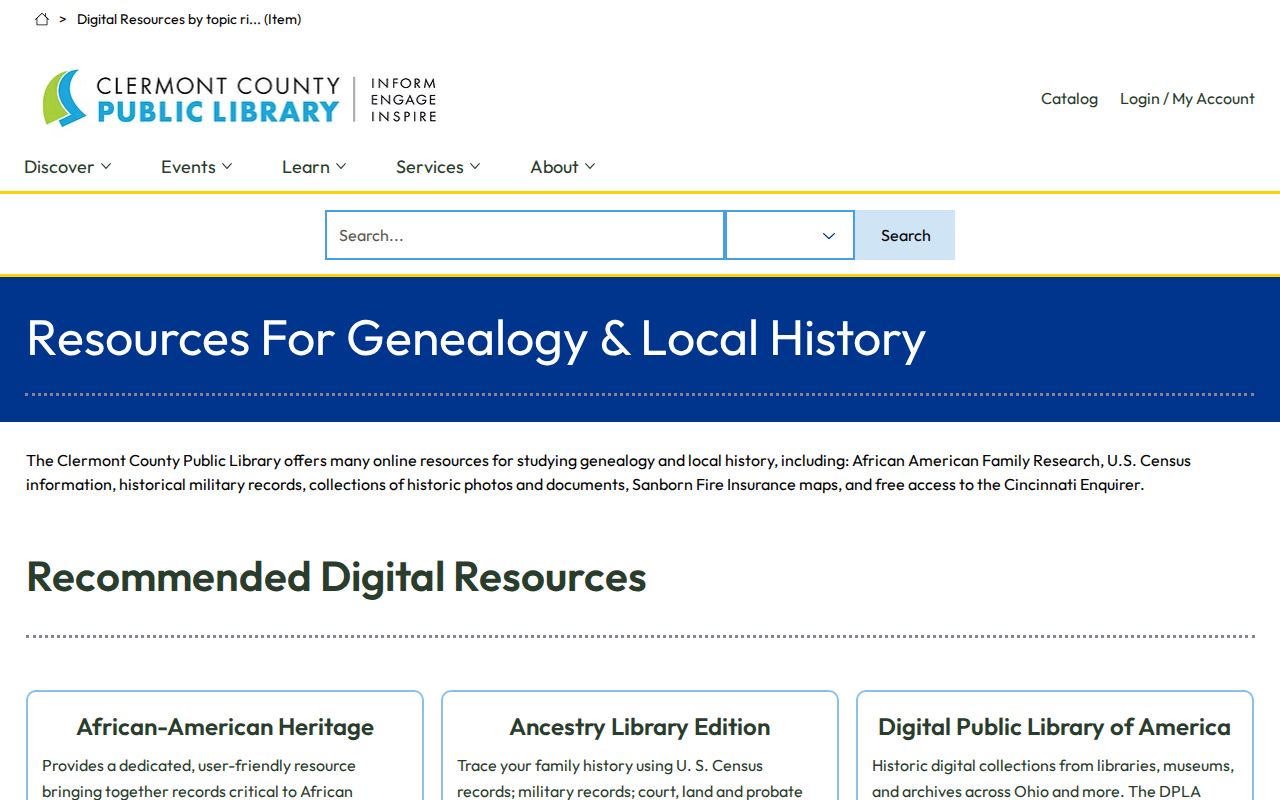
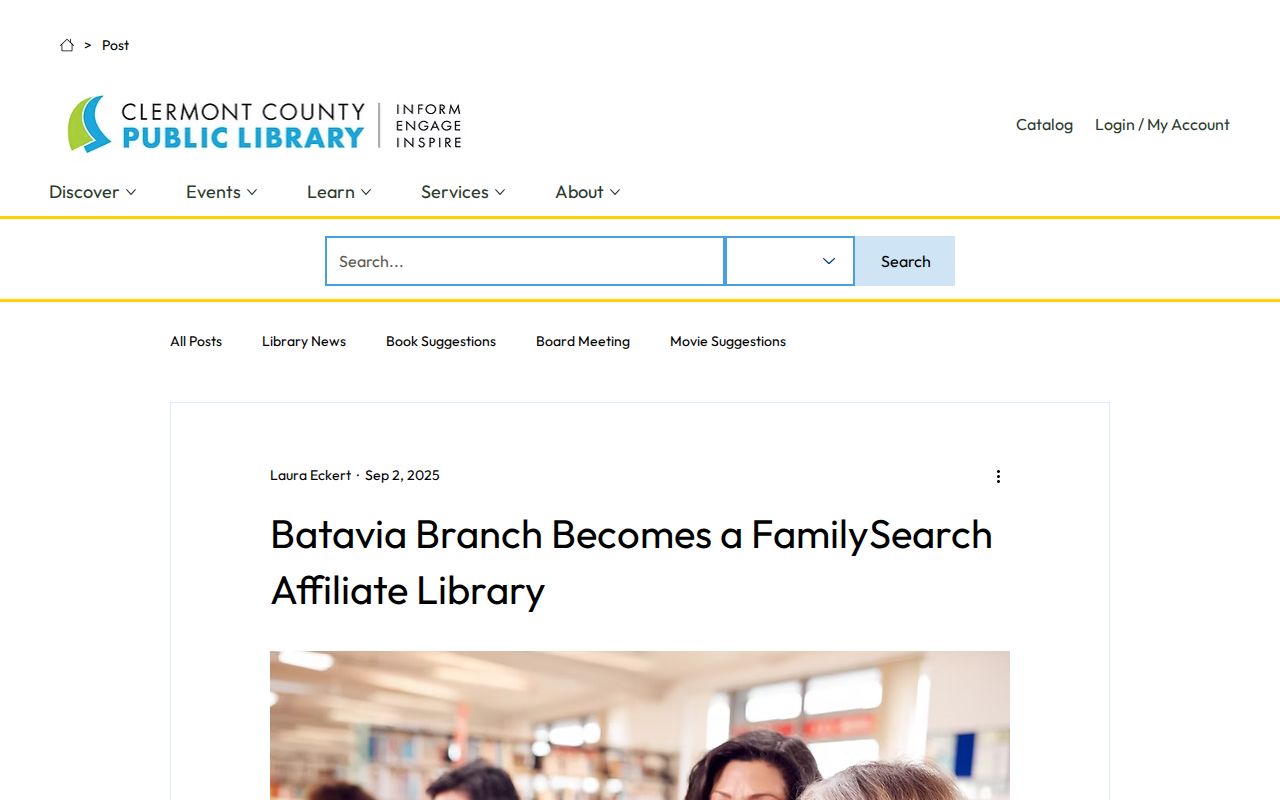
The library genealogy resource offers more than shelves. Ancestry Library Edition is available only in the library. FamilySearch can be used with a free account, and Batavia is a FamilySearch affiliate library. HeritageQuest provides full-text family and local histories plus selected early census images and indexes. These sources can help locate a household between the few verified directory dates.
The same resource lists the Cincinnati Enquirer through ProQuest, with full-page and article images from 1841 through 2009 and library-card access from home. Ohio Web Library’s Sanborn maps cover plans produced from 1867 through 1970. Sanborn maps establish building footprints, streets, and development context, not a resident list.
Clermont Library genealogy and local-history resources show the database routes and their access limits.
Miami Township Database Access
Library access rules shape the search order. A free FamilySearch account can be used from home, while Ancestry Library Edition requires an in-library visit. The Batavia Branch affiliate status can make it the right stop when an item needs library access. Bring the exact title, year, and surname variant already found in the catalog so time at the branch goes to inspection rather than broad searching.
The Batavia Branch FamilySearch affiliate announcement confirms that local access route.
Limits of a Miami Township Directory
A directory is not a complete roll of everyone connected to Miami Township. It may use a county, city, postal, or historic-community heading; it can omit a household; and an address line does not establish legal ownership. Treat every listing as one dated piece of evidence. Compare it with a census, recorded instrument, map, or newspaper notice before joining it to a family or property history.
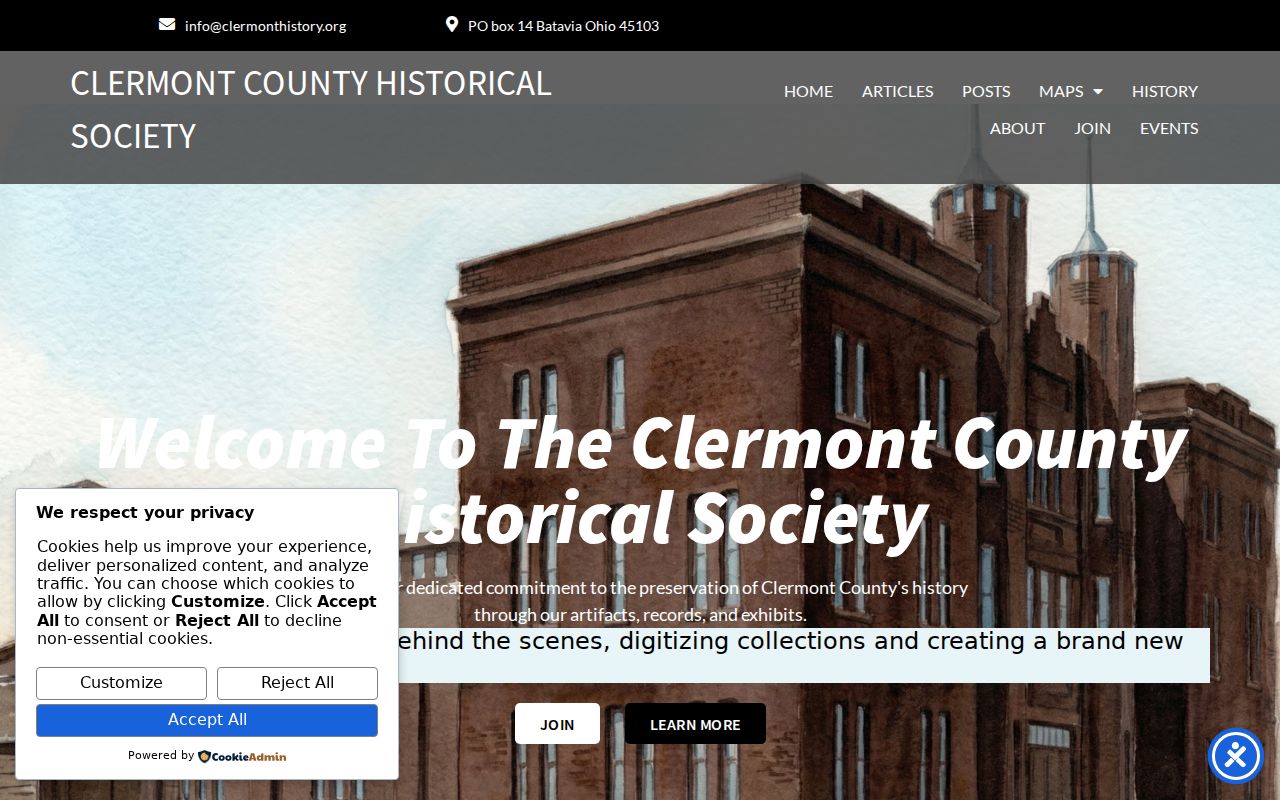
The Clermont County Historical Society and the Milford Historical Society are useful contact points for old maps, family files, photographs, cemetery context, and local-history guidance, but each holding must be confirmed directly. County Records Management also reports 6,500 historical journals and plat books, although requests still begin with the office that created the record.
The Clermont County Historical Society is a local-history contact route for collection guidance.