
Walk a Miami Township Street Record
Begin with the Clermont County Auditor address search for a Miami Township address, not with a guess about a household. A street result can lead to a situs address, parcel number, tax-roll owner, owner mailing address, legal description, value fields, and a transfer reference. The situs address is the physical location used for the parcel. A mailing address is only where tax correspondence goes. Those two entries can differ, so neither one alone establishes who is presently at a property.
- Enter the address or parcel with the Auditor and save the parcel number, legal description, and transfer reference.
- Find the same location in Clermont General Online Maps; identify the parcel and turn on road, address, township, ZIP, precinct, or zoning layers as needed.
- Take the current owner and legal description to the Clermont County Recorder CountyFusion search to locate the acquisition deed and prior transfer.
- Use the Ohio My Voter Information screen only to check one named person in Clermont County. It is not a street roster.
- For an older listed address, ask the Batavia genealogy collection about actual reverse or criss-cross volumes after checking its catalog.
That sequence keeps Miami Township address research tied to public, address-keyed sources. A parcel may show an ownership trail, while an individual registration search may confirm a public election record. They are different kinds of evidence.
Read Miami Township Parcels by Address
The Auditor is the practical front door for a Miami Township street search. Its property record establishes the county parcel vocabulary that makes later deed and plat work more reliable. The legal description, subdivision, and lot can survive changes in common address wording. A transfer or deed reference is useful for narrowing a Recorder search, particularly when an owner name is common.
| Auditor field | How it helps a street search | Important limit |
|---|---|---|
| Owner name | Finds the tax-roll owner tied to a parcel. | It is not a household list. |
| Situs address | Connects a street location to its parcel card. | Confirm the displayed current record. |
| Parcel number | Provides a stable link among maps and property records. | Use the format shown by the Auditor. |
| Mailing address | Shows a correspondence destination for the owner. | It does not prove occupancy. |
| Legal description / lot | Bridges a street address to deeds, plats, and surveys. | Older instruments may use only this description. |
The Auditor address screen is the source for this view of property research.
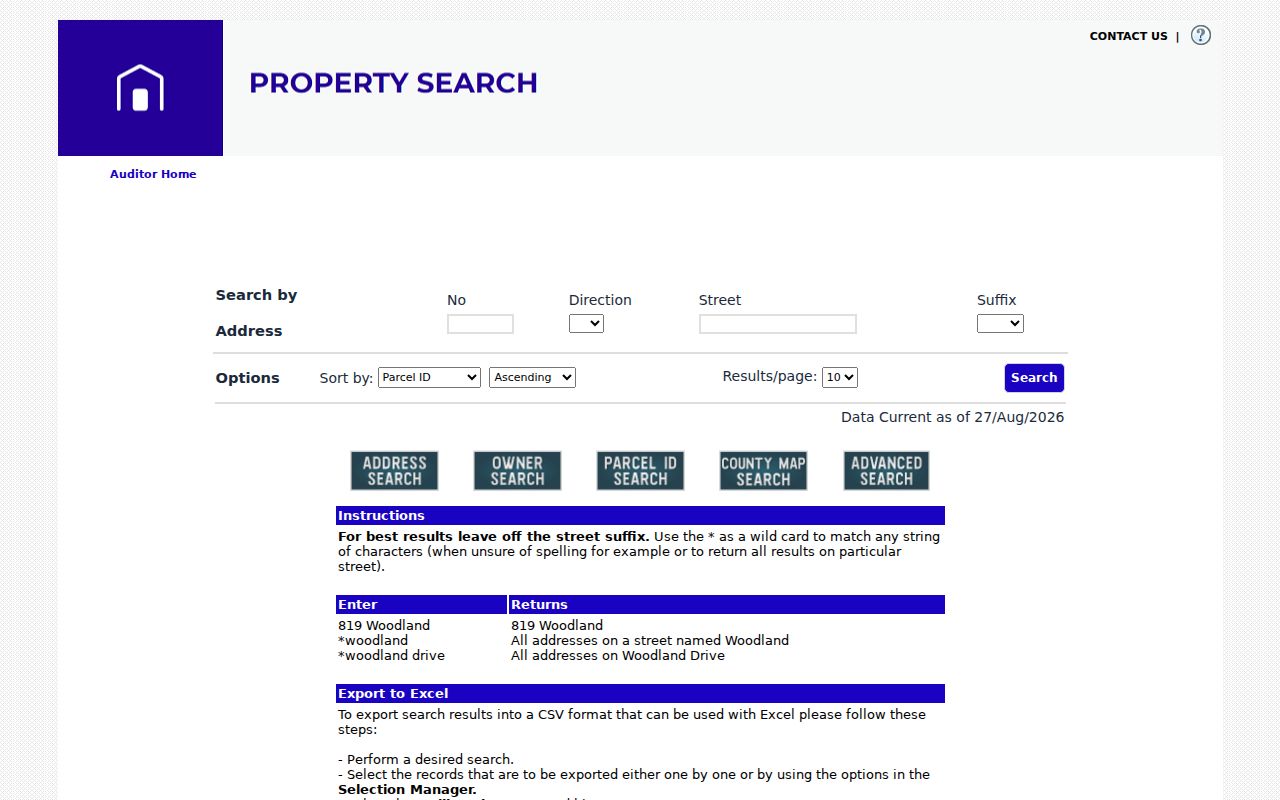
Use the screen to start with the address fields, then preserve the parcel information rather than relying on a street label alone. Note: Parcel details describe the tax roll and property context, not every person associated with the address.
Map Miami Township Streets in GIS
General Online Maps supplies the geographic check in an address search. The county describes its viewer as supporting Search, Identify, Measure, and Print. Search locates an address, street, or mapped feature. Identify selects a parcel or another visible layer feature. Measure gives a distance or area relationship, while Print preserves the active layer context for later comparison.
For Miami Township, turn on parcels and addresses first, then add roads, township boundaries, ZIP boundaries, precincts, or zoning only when the question calls for them. The county also publishes downloadable parcel, address, road, ZIP, precinct, zoning, township, and school-district layers. The listed address, parcel, road, and ZIP downloads include 2025 updates, so date any map conclusion and recheck the live map before relying on it.
GIS shows where Miami Township parcel polygons meet along a road. It does not identify everyone present there. For a longer named-road investigation, map each parcel, then use its published identifiers with the Auditor and Recorder instead of treating a visual block as a resident list.
Miami Township Street Directory Sources
Each address-linked source answers a different question. The following coverage table keeps the Miami Township street directory focused on the record keeper, its key, and the limit of its evidence. Property, map, deed, permit, and voter material should not be collapsed into one claim about a household.
| Address-linked record | Keeper | What it can show | Access and restraint |
|---|---|---|---|
| Property roll | County Auditor | Parcel, tax-roll owner, situs and mailing distinction, legal description. | Search the official property record; verify its display date. |
| Parcel and address layers | County GIS | Parcel adjacency, roads, and jurisdiction overlays. | Map geography, not occupancy or private contact data. |
| Deed and mortgage index | County Recorder | Grantor, grantee, recording chronology, and title trail. | Web copies reach 1980 to present; older material is held by the Recorder. |
| Permit and zoning activity | Permit Central / Township | Retained project and land-use chronology. | Request or counter route; completed-project plans are destroyed. |
| Individual voter record | Ohio Secretary of State | Public registration information for a named search result. | Not a street list; confidential records remain protected. |
Miami Township address records fit together through the parcel number and legal description. The street name is useful for orientation, but it may not be the Recorder's indexed search field for older instruments.
Follow Miami Township Deeds by Legal Description
The Recorder's CountyFusion index is the title-history part of an address search. Search the current owner as a grantee, select a document type or date range where needed, and compare the legal description before accepting a match. The resulting index can show party roles, document type, recording date, instrument number, book or page where applicable, property cross-reference, and an image link when available. Grantor means the party conveying an interest; grantee means the party receiving it.
For Miami Township, CountyFusion's All Names screen accepts a last name followed by a first name. Its Name Options include Exact Match, Remove Characters, Similar Names, and Surrounding Names. A broad surname can exceed the 20,000-result cap, so add a date range or document type. Keep historical documents selected for pre-1993 work when the search instructions call for it. This is a party-and-description chain, not a modern street-number deed filter.
The Recorder's CountyFusion instructions show the entry point and search guidance.
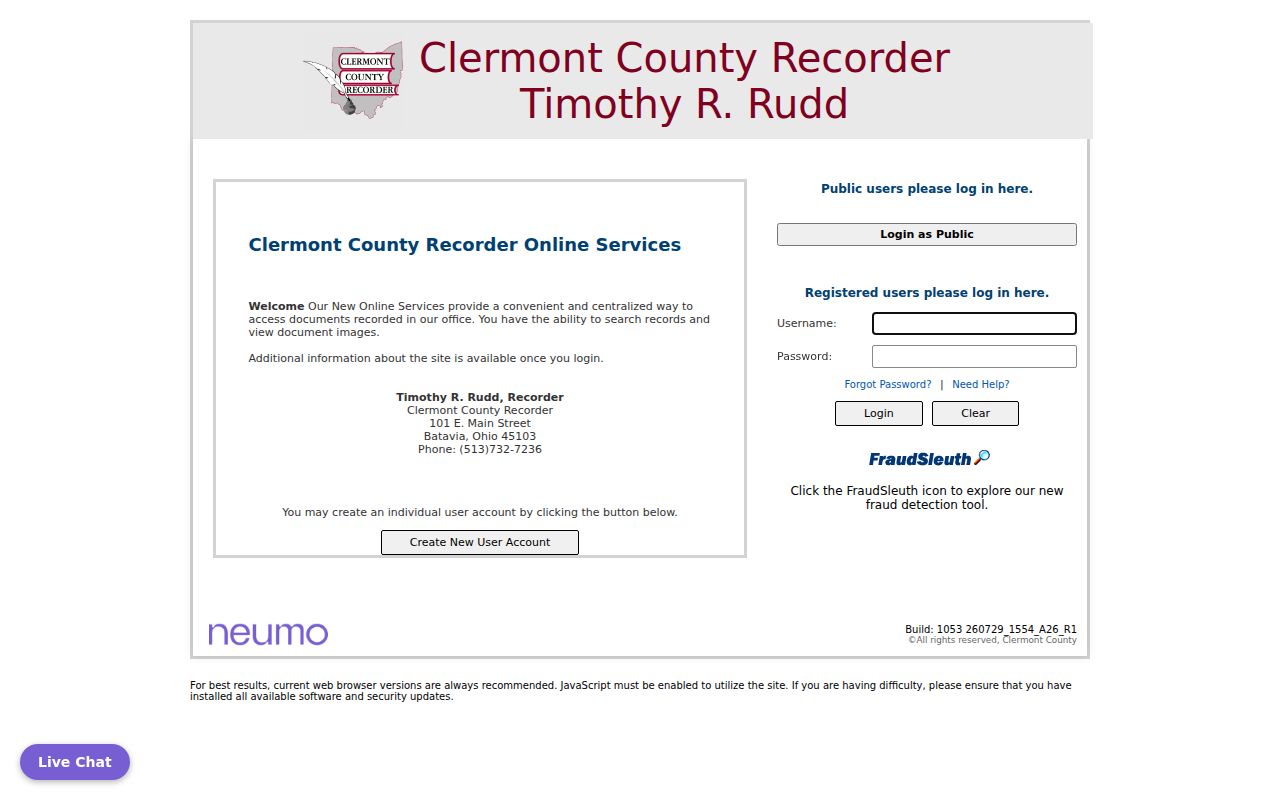
For a Miami Township record before the web period, contact the Recorder for books, pages, or historical access instead of assuming the title chain ends online.
Use Miami Township Recorder Copy Routes
The Recorder provides more than one route when a Miami Township web image is missing. Web copies cover recorded real-estate documents from 1980 forward. At the counter, computer-printed copies cost $0.10 per page; a staff-pulled book page costs $0.25. A mailed request needs the correct fee and a self-addressed stamped envelope, and mailed copies cost $2 per page. Checks go to the Clermont County Treasurer. Credit cards carry a 2.5 percent convenience fee or a $2 minimum.
This is an important Miami Township practical limit, not a dead end. Identify the document clearly and state the requested format. The Recorder recommends, but does not require, its public-records request form. The office evaluates requests for the time needed. County Records Management keeps many historical materials but directs requesters to the office of origin, which remains the custodian.
Resolve Miami Township Street Name Changes
An old Miami Township address can fail because a deed or map used another community name, road label, or legal description. The Recorder's public-record policy includes annexations, centerline surveys, street-name changes, and vacations of streets and alleys. Ask for the recorded instrument or map when an address trail breaks. Do not infer a change just from a current road name.
Miami Township also has historic place-name vocabulary. Search Branch Hill, Guinea City, Mulberry or New Salisbury, O'Bannonville or O'Banionville, and Perintown or Perin's Mills beside the current name where a catalog, newspaper, map, or deed requires it. Branch Hill was laid out in 102 lots in 1873. Its early streets included Asbury, Coke, McKendree, Wesley, and Grand. These terms help identify historic context, not present occupants.
Check Miami Township Address Permits
Miami Township's iWorQ permit search offers Permit Number, Permit Date, Parcel, Address, and Applicant Name choices. Date searching supplies a start and end date. Result rows show a permit number, date, permit type, status, and a view link. A public detail can include a project description, parcel, site address, owner name and address, project cost, floor area, expiration or status, and uploaded-file count.
For Miami Township, permit data is evidence of an application or project, not a current household record. Clermont County Permit Central retains permits and other records under approved schedules. It accepts written requests by email, counter, phone, or fax, but states that construction plans are destroyed after a project is complete.
The township permit search illustrates the address and parcel choices available for the investigation.
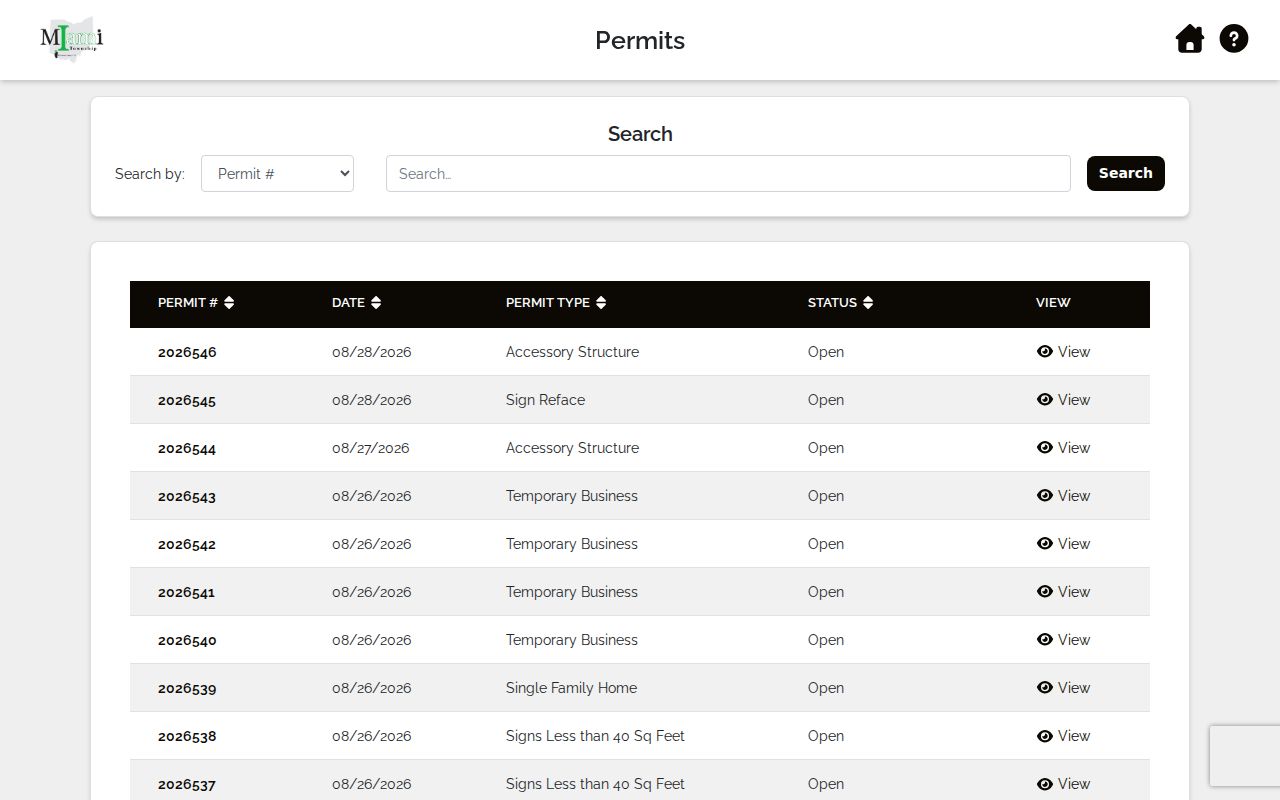
Use the permit number or parcel to preserve a clear Miami Township project trail when a street name appears in several record systems.
The Permit Central public-records instructions document its request channels and retention limitation.
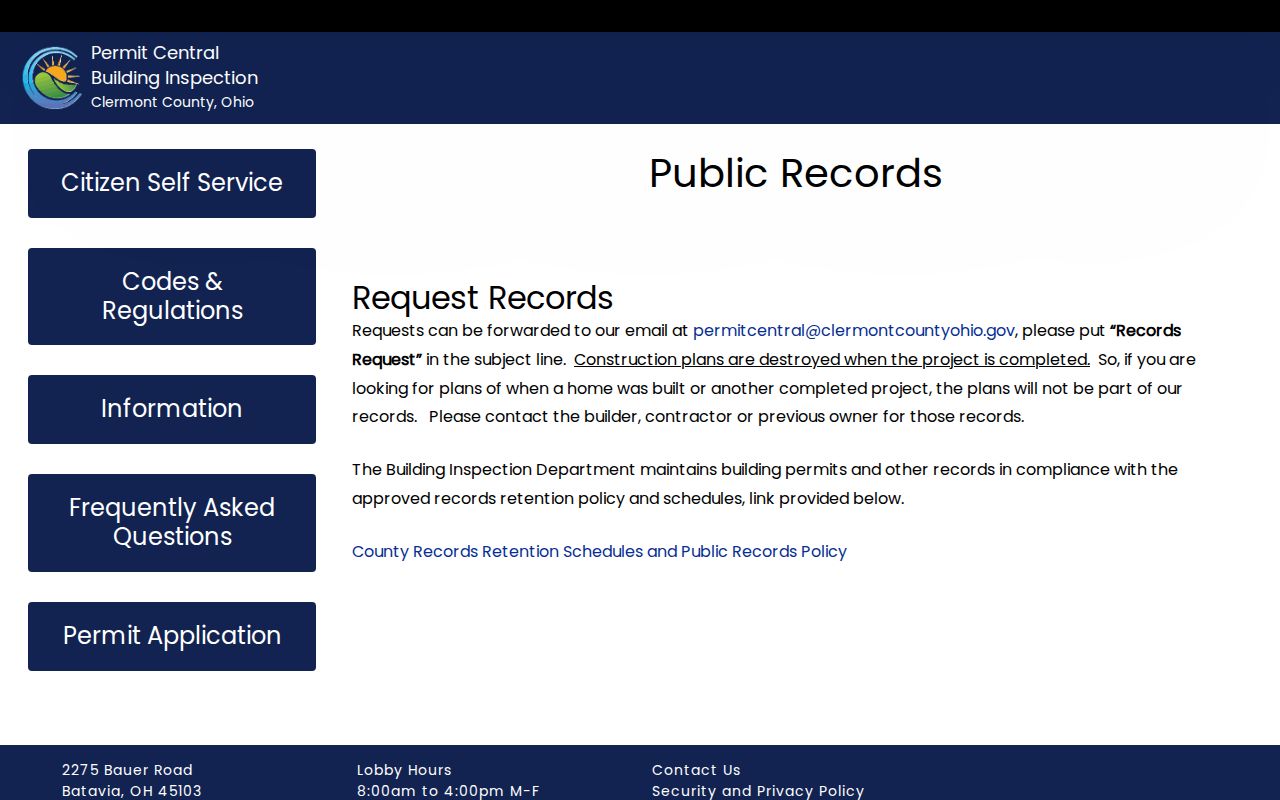
Ask for retained permit records and related inspection material, while recognizing that a completed project's plans cannot be recreated from that office.
Define Miami Township Street Records
Miami Township street research uses terms that can look interchangeable but are not. Keeping them separate makes searches more accurate when the ordinary address does not appear in a historical instrument.
- Parcel
- A county property unit with an identifier used in the tax roll and map layers.
- Situs address
- The physical property location used to find an Auditor parcel.
- Plat
- A recorded map that lays out lots, blocks, streets, or subdivision details.
- Criss-cross directory
- A historical reverse directory arranged by address rather than only by name.
When current sources stop at a parcel, a historical criss-cross directory may give an older listed address. The collection itself belongs to the Miami Township city directories research path, where the library and historical holdings are the focus.
Separate Miami Township Street Evidence
The statewide voter screen requires first name, last name, and county, then may offer street-name narrowing after a broad result. It cannot responsibly generate a Miami Township street list. Ohio's separate voter-data route is a file-selection system with daily county snapshots, and its current request terms must be checked before use. Clermont County Board of Elections is the local fallback for registration questions, corrections, historic poll-book availability, and voter-data procedures.
Miami Township Police Records is another address-adjacent, but limited, record channel. It maintains a crash-report index by date, driver, and location. That may document an incident at a road location, not an ongoing address connection. Its stated counter hours are weekdays, 8:00 a.m. to 4:30 p.m.; request options include in-person, fax, mail, and email subject to report access controls.
The Police Records Section describes its access channels and retention information.
A crash record can place a reported event on a road. It should never be treated as a current directory of people on that street.
Limit a Miami Township Street Directory
A Miami Township parcel owner or owner mailing address is not a complete roster of people at the situs property. GIS geometry supplies location and adjacency, not private contact information. Utility customer lists are not a substitute public directory, and federal Driver's Privacy Protection Act rules restrict motor-vehicle address data. Safe at Home participants can use a designated address with government entities, and confidential voter records are not public.
Ohio's Public Records Act opens nonexempt records, while Safe at Home protections limit disclosure for eligible participants. Correct an ownership, address, or recorded-document issue with the original custodian. A record match is useful for personal, family-history, estate, property, or civic research only when its source and limits are respected.